
What prevails Area Maintenance?
How Does Common Area Maintenance Work?
What Does Common Area Maintenance Include?
How to Calculate CAM Charges
Common Area Maintenance Formula (CAM).
Common Area Maintenance Calculator (CAM).
CAM Charges Calculation Example.
What prevails Area Maintenance?
Common Area Maintenance (CAM) refers to the charges incurred by tenants on top of their base rent that are utilized to cover regular charges to preserve the shared areas of an offered residential or commercial property.
How Does Common Area Maintenance Work?
Common area upkeep (CAM) charges are different fees incurred monthly on top of the base rent to cover costs related to residential or commercial property maintenance.
CAM stands for "Common Area Maintenance", and refers to the charges paid by occupants to their landlord for the upkeep of a residential or commercial property's common area.
The significance of typical area upkeep (CAM) tends to be greater for business property (CRE) residential or commercial properties since there are more renters and shared areas in such residential or commercial properties.
- Usable Area → The functional location is the area that leased by a specific occupant. Therefore, the functional square video in a structure is what is inhabited by an unique occupant, inclusive of bathrooms, private conference spaces, and specific offices.
- Common Area → On the other hand, the common location of a building is not leased to a specific however is rather accessible to all occupants for collective use. These shared locations can consist of lobbies, parking area, roof decks, and elevators.
So, who spends for the costs connected to preserving the common location?
Since all occupants can utilize the space, as part of the leasing arrangement, each of them contribute towards such payments, generally on a pro rata basis.
With those earnings, the property manager is expected by tenants to ensure the common areas are kept arranged and clean, while repairing issues or repairing damages.
What Does Common Area Maintenance Include?
The most regular types of common locations at residential or commercial properties include the following examples:
- Lobby and Hallway.
- Open Area Workspace.
- Fitness Center (Public Gym).
- Janitorial Services.
- Elevators.
- Parking Spaces.
- Shared Amenities.
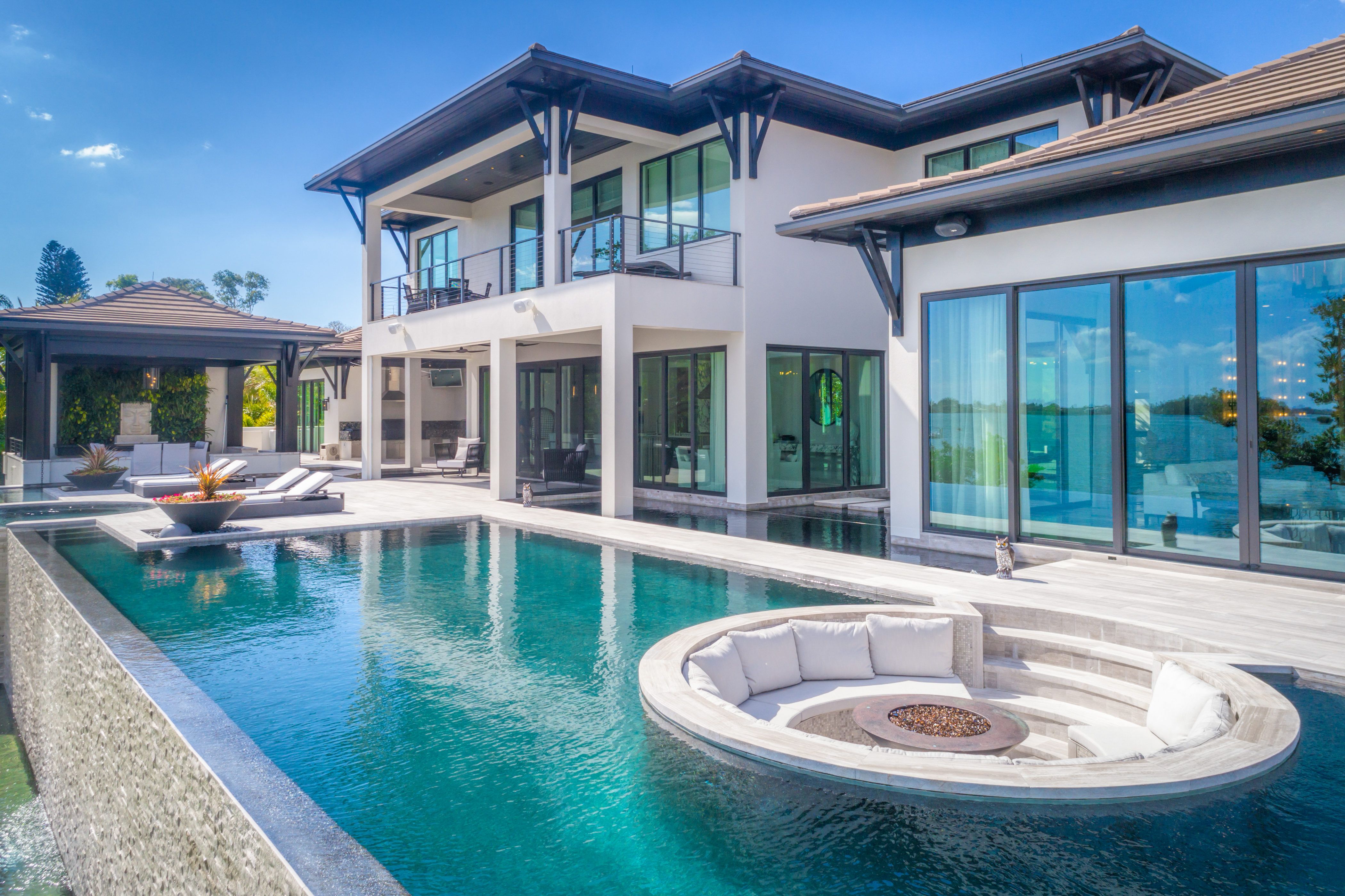
- Surrounding Outdoor Areas (Pool).
- Building Security and Alarm Systems.
- Concierge Services.
- Roofing and Landscaping
For example, if the elevator shared by all tenants were to malfunction, the property manager is accountable for repairing the issue promptly.
The stipulation relating to typical area maintenance (CAM) charges is stated in business realty leases, where the specific terms around the contractual responsibilities of each celebration (the lessor and the lessee) are set.
Furthermore, the kind of lease signed between the two celebrations is key to figuring out each party's respective responsibilities, e.g. triple net (NNN).
How to Calculate CAM Charges
The CAM charges matter in property, specifically for industrial residential or commercial properties, due to the fact that the costs impact the total expense of dedicating to a rental plan at a given residential or commercial property.
In a lot of leasing contracts, the tenants pay a portion of the overall CAM on a pro rata basis per the negotiated agreement, i.e. in proportion with the amount of square video footage rented.
The computation of each occupant's typical location maintenance (CAM) cost, revealed on a yearly basis, can be determined by dividing the occupant's square video by the gross leasable area in the structure.
- Step 1 → Divide the Tenant's Rentable Square Footage (RSF) by the Gross Leasable Area (GLA) of the Residential or commercial property.
- Step 2 → Multiply the Pro-Rata Share (%) by the Estimated Annual CAM Charges of the Residential or commercial property.
- Step 3 → Convert the Annual CAM Charge of a Renter into a Month-to-month Fee (Divide by Twelve Months)
Common Area Maintenance Formula (CAM)
The common area upkeep (CAM) incurred by each renter is calculated by multiplying their particular pro-rata share of expenses by the expected annual CAM charge.
Where:
- Pro-Rata Share (%) = Tenant Rentable Square Footage (RTF) ÷ Gross Leasable Area (GLA).
- Annual CAM Charge = Σ Monthly CAM Fees × 12 Months
Since the renter CAM charge is an annualized metric, the amount needs to be divided by twelve to transform into a monthly fee.
Conversely, an alternative method to determine the CAM charges is on a per square foot (sq. ft.) basis, which is done by dividing the approximated yearly CAM costs by the residential or commercial property's leasable square video footage.
Since CAM costs are most often allocated based upon the quantity of space occupied, the tenants with more space rented will sustain more CAM charges (and vice versa).
Common area upkeep is most typically determined on an annualized basis, and then divided into monthly payments attributable to each occupant on a per square foot basis.
Usually at the start of each year, a residential or commercial property owner will predict the upcoming common location maintenance (CAM) costs for the entire residential or commercial property as part of the yearly spending plan, which affects rates.
Broadly put, CAM charges fall under 2 categories:
1. Controllable Charges → The residential or commercial property owner has direct impact over manageable charges (e.g. administrative expenses, personnel payroll).
2. Uncontrollable Charges → On the other hand, unmanageable charges, remain outside the residential or commercial property owner's control and are unforeseeable (e.g. snow storm, fire).
However, CAM cost cost caps and floors can set constraints on how much lease can be changed.
FAQ: Is Capital Investment Included in CAM?
For the many part, capital expenses (Capex) are omitted from common area upkeep (CAM), based on the context of the invest.
Why? Capex related the residential or commercial property improvements, such as building a more contemporary fitness center for renters, are a form of discretionary spending (and part of the proprietor's expense of ownership).
However, particular non-discretionary capital expenses can be classified as common area maintenance, such as fixing a damaged A/C system, which impacts all existing (and future) occupants.
Common Area Maintenance Calculator (CAM)
We'll now carry on to a modeling workout, which you can access by submitting the kind listed below.
Get the Excel Template!
CAM Charges Calculation Example
Suppose a residential or commercial property owner is estimating the common area upkeep (CAM) charges expected on their commercial office complex for the approaching year, 2024.
The total annual CAM charges for the entire office complex are projected to be $260k, while the gross leasable area (GLA) is 50k sq. ft.
- Annual CAM Charge = $260,000.
- Gross Leasable Area (GLA) = 50,000 sq. ft.
After dividing the overall annual CAM charges by the gross leasable area (GLA), the CAM charge per square foot is $5.20, which represents the quantity that each commercial renter should contribute based on the quantity of square footage leased per year.
- CAM Charge per Square Footage = $260,000 ÷ 50,000 sq. ft. = $5.20
The approximated CAM charge per square video footage - $5.20 sq. ft. - must then be allocated in proportion with each occupant's pro-rata share.
The pro-rata share is identified by dividing the individual occupant's square footage by the gross leasable location (GLA) of the office complex.
Therefore, if one of the industrial occupants rented a total of 6k sq. ft., the pro-rata share is 12%.
- Pro-Rata Share (%) = 6,000 sq. ft. ÷ 50,000 sq.
.